
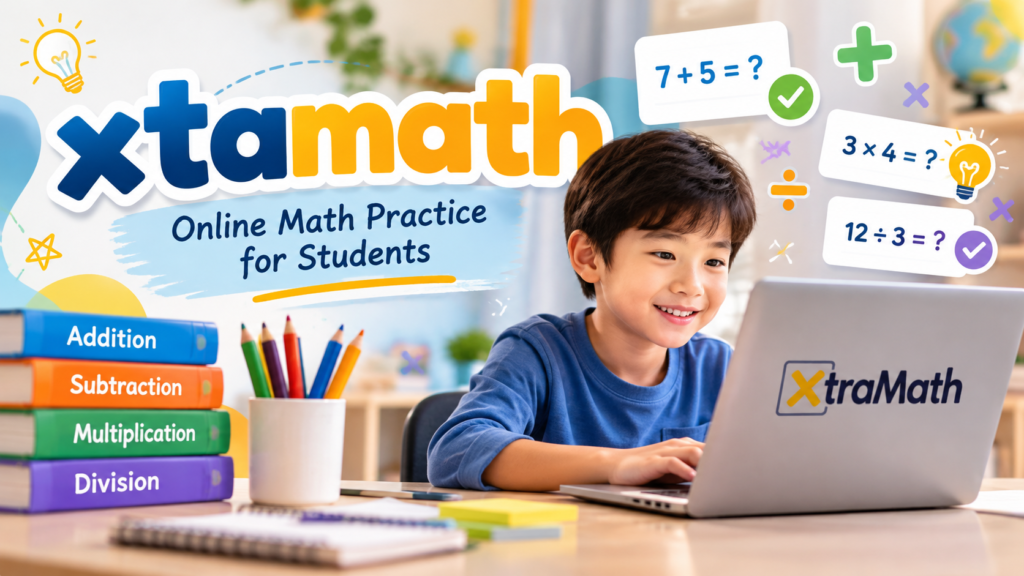
Learning mathematics becomes easier when students have enough opportunities to practise basic skills. However, many children struggle with remembering addition, subtraction, multiplication, and division facts. They may understand how a calculation works but take too long to find the correct answer. This is where xtamath becomes a useful topic for parents, teachers, and students looking for simple online math practice.
XtraMath is an online educational program designed to help children improve their basic arithmetic skills through short and focused practice sessions. It encourages students to remember math facts more quickly instead of relying on counting every time. The platform is particularly useful for elementary school learners who need extra practice outside regular classroom lessons.
Whether a child is learning multiplication for the first time or reviewing addition facts, understanding how this learning program works can help parents make better educational choices.
What Is xtamath?
The keyword xtamath is commonly used when searching for XtraMath, an online math fact fluency program. Its main purpose is to help students develop speed, accuracy, and confidence when solving basic arithmetic questions.
Unlike a complete mathematics course, XtraMath focuses on practising facts that students have already learned. It does not replace classroom teaching or explain every mathematical concept from the beginning. Instead, it gives learners an opportunity to strengthen their existing knowledge through repetition.
According to the official XtraMath website, the program uses spaced repetition and adaptive practice. This means students receive questions based on their previous performance, allowing them to spend more time practising facts they have not mastered yet.
The program is designed mainly for kindergarten through sixth-grade learners, although older students can also use it for revision and additional support.
How Does XtraMath Work?
Getting started with XtraMath is relatively straightforward. Students access the program through an internet-connected device and complete short activities that focus on different arithmetic operations.
The learning process is designed to be consistent rather than complicated.
Here is how a typical session works:
- Student access: A student opens the program using their assigned account or classroom access details.
- Initial assessment: The program checks the student’s current arithmetic skills through questions and quizzes.
- Daily practice: Students answer basic math questions during short learning sessions.
- Instant feedback: The program provides feedback when an answer is incorrect.
- Progress tracking: Previous performance helps determine which questions should appear during future activities.
One important feature is its adaptive learning system. Students do not necessarily receive the same questions in the same order. The program adjusts practice according to their individual progress.
And that’s what makes regular use helpful. A child who struggles with multiplication can spend more time developing that skill instead of repeatedly answering questions they already know.
Main Features of xtamath
XtraMath includes several features that make it useful for independent practice and classroom learning.
| Feature | How It Helps Students |
|---|---|
| Addition practice | Improves recall of basic addition facts |
| Subtraction practice | Develops confidence with subtraction |
| Multiplication practice | Helps students remember multiplication tables |
| Division practice | Strengthens understanding of basic division facts |
| Adaptive learning | Adjusts questions according to student progress |
| Progress reports | Helps parents and teachers monitor performance |
| Short sessions | Makes daily practice easier to manage |
1. Addition and Subtraction Practice
Addition and subtraction are important foundations for learning more advanced mathematics. Students need to understand how numbers work before moving towards more challenging calculations.
XtraMath provides practice activities that help learners remember basic addition and subtraction facts. For younger children, the beginning-level program focuses on smaller numbers and simpler questions.
For example:
- 4 + 3 = 7
- 8 + 2 = 10
- 9 – 4 = 5
- 10 – 6 = 4
Repeated practice helps students become more comfortable answering these questions without counting on their fingers every time.
2. Multiplication and Division
Multiplication and division can become challenging when students are expected to remember several number combinations.
XtraMath provides activities for practising multiplication facts and their related division facts. Students can gradually improve their ability to recall answers.
For example, understanding that 6 × 4 = 24 also helps learners recognise that 24 ÷ 6 = 4.
But students should first understand the meaning of multiplication and division. Memorising answers without understanding the underlying concepts may create difficulties later.
3. Adaptive Learning System
One useful feature is the way XtraMath responds to student performance.
If a learner answers certain questions correctly and quickly, the program can reduce the attention given to those facts. Questions that need additional practice can appear more frequently.
This approach helps make learning more personalised.
It also means children can work towards their own goals instead of feeling pressured to follow another student’s progress.
4. Progress Tracking and Reports
Parents and teachers often want to know whether a child is actually improving.
XtraMath provides progress information that helps educators understand student performance. They can review areas of strength and identify arithmetic facts that still require attention.
These reports can also support classroom planning. A teacher may use the information to decide which students need additional explanation or more practice.
Benefits of Using xtamath for Students
Regular arithmetic practice can support children’s overall mathematical development. XtraMath offers a structured way to build these skills through short activities.
Some important benefits include:
- Better calculation speed: Repeated practice helps students recall basic answers more quickly.
- Improved accuracy: Immediate feedback helps learners recognise and correct mistakes.
- Greater confidence: Familiarity with arithmetic facts can make mathematics feel less intimidating.
- Independent learning: Students can complete activities with less direct assistance once they understand the process.
- Consistent practice: Short sessions are easier to include in an everyday learning routine.
- Useful progress information: Parents and teachers can identify areas that need additional attention.
Another benefit is that stronger arithmetic recall can make more advanced topics easier to approach. When students spend less mental effort calculating simple answers, they have more attention available for fractions, algebra, and word problems.
How Parents and Teachers Can Help Children
Technology alone cannot guarantee better learning results. Children still need encouragement, clear explanations, and opportunities to practise mathematics away from a screen.
Parents and teachers can make the experience more productive by following a few simple suggestions.
Create a regular routine. Encourage children to complete short practice sessions consistently rather than spending a long time on mathematics once a week.
Explain difficult concepts first. Remember that XtraMath focuses on fluency, not teaching every underlying mathematical strategy. Children should understand how to solve a problem before practising faster recall.
Celebrate small improvements. Recognising progress can help children stay motivated, especially when they find a particular operation difficult.
Review progress reports. Parents and teachers should use available reports to identify questions that need additional explanation.
Avoid unnecessary pressure. Speed is one part of arithmetic fluency, but understanding and accuracy are important too.
XtraMath vs Traditional Math Practice
Both traditional worksheets and online learning programs can help students develop arithmetic skills. However, they offer slightly different experiences.
| Comparison | XtraMath | Traditional Worksheets |
|---|---|---|
| Learning format | Online activities | Printed exercises |
| Feedback | Immediate digital feedback | Usually checked by an adult |
| Question selection | Adaptive practice | Usually predetermined |
| Progress monitoring | Digital reports | Manual tracking |
| Device requirements | Internet-connected device | Paper and pencil |
| Learning environment | Screen-based | Offline |
Neither method is automatically better for every child. Some learners enjoy digital activities, while others prefer writing answers on paper.
Using both approaches can provide a balanced learning experience.
Is xtamath Suitable for Every Student?
XtraMath can be useful for many elementary school students, but it is important to understand its purpose.
Children who already know how to perform basic calculations may benefit from practising faster recall. Students who are still learning what addition, subtraction, multiplication, or division actually means may need direct instruction first.
The program also includes different difficulty settings and practice options, allowing educators to select activities that match individual learning needs.
Parents should pay attention to how their children respond to timed activities. If a student becomes frustrated, adjusting the practice approach or discussing the difficulty with their teacher may help.
Final Thoughts
The xtamath search term leads many people to information about XtraMath, an educational platform focused on building basic arithmetic fluency. Its short practice sessions, adaptive questions, and progress-tracking features make it a useful option for supporting mathematics education.
However, the best results come from combining digital practice with proper teaching, regular revision, and encouragement at home or school.
Children do not need to master every calculation overnight. Small improvements matter. With patience and consistent practice, students can develop stronger number skills and become more confident when approaching everyday mathematics.